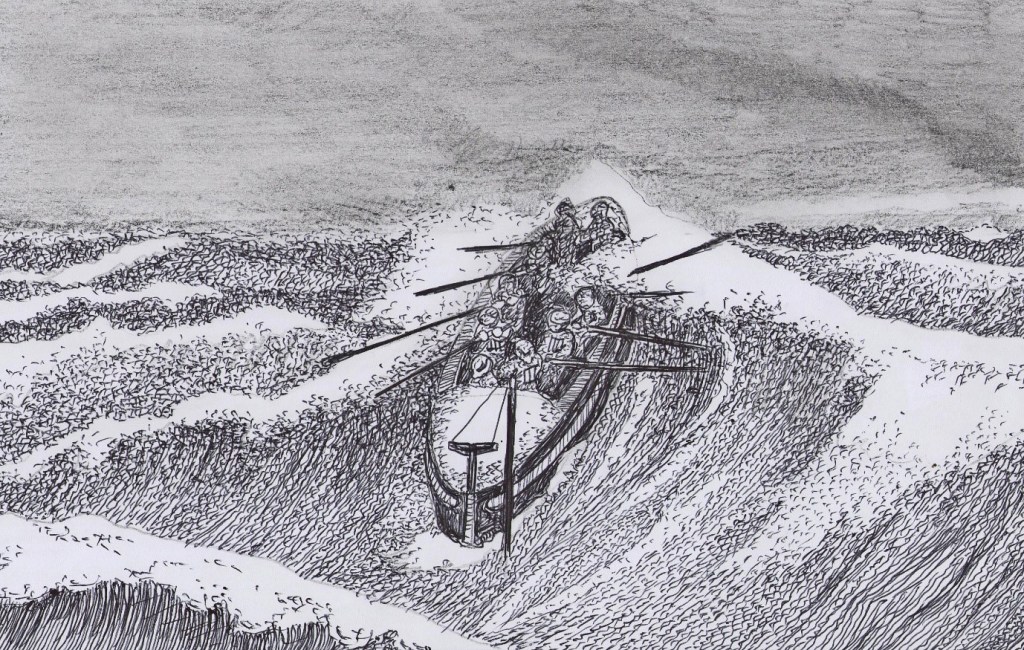
Lifeboat ‘Edward Wasey’ (1862-1879)
Following the loss of the first lifeboat that had only been on station at Fleetwood for three years, since 1859; at a meeting of the Lifeboat Committee, it was resolved to make application to the National Lifeboat Institution for a ten-oar’d boat, that would be better suited to the local conditions than the previous one.
Captain Wasey’s family had a tradition of philanthropy. In 1862 Miss Mary Wasey of Newbury gave the RNLI £340 for a bigger and better Fleetwood boat with a new launching carriage. At her request, it was named Edward Wasey as a tribute to the leadership and courage of the man who established Fleetwood’s proud reputation as a lifeboat station.
Once again, the boat was built at the Forestt yard in Limehouse, London. It was bigger than its predecessor. This time there were 10 oars to power a 32-foot craft with a beam of 7 feet 11 inches. The bill was £224 16 shillings and 6 pence with an additional £90 8 shillings for the launching carriage.
The London and North Western Railway Company provided free transport for the craft and equipment from London to Fleetwood.
Within three months of the Edward Wasey lifeboat being placed on station at Fleetwood and before she had been called out on active service a violent storm on 20th January, 1863 undermined the foundation of the boathouse almost washing it away and causing considerable damage to the lifeboat. Within a day the lifeboat had been temporarily repaired but she required major repairs, at considerable expense, to restore her to her former condition. The boathouse was damaged beyond repair and to prevent a similar occurrence a new brick built lifeboat-house was erected in Pharos Place.
The first service call on the Edward Wasey lifeboat came on 29th October, 1863, to assist the schooner Northern Lights, of Preston, when she ran aground on Bernard Wharf. The lifeboat, under the command of coxswain James Leadbetter, was towed out by the steam-tug Wyre, skippered by Captain William Swarbrick. At the top of the channel the tow rope was slipped as they approached the casualty. It was a dark and stormy moonless night but the cries for help from those on board the Northern Lights could be heard above the violence of the storm. This helped the lifeboat crew to find the vessel that was aground in the breaking surf on the northern edge of Bernard Wharf. The lifeboat was manoeuvred into position under oar and approaching from the weather side the four crew were plucked to safety.
The storm continued overnight and the following day 30th October, 1863 the barque Lillias, of New Brunswick, dragged its anchors and grounded in the Lune Channel. Again the tug Wyre, with Captain Swarbrick and his crew, towed the lifeboat out to assist. On this occasion having slipped the lifeboat tow rope the tug found that they could get in close enough to the Lillias for 26 crew members to jump across onto the tug Wyre. The captain of the Lillias and two Mates decided to remain on board their stranded vessel. The lifeboat re-launched at daybreak to return to the Lillias and by this time the wind had moderated. The seas were still large from the previous storm and the lifeboat took some time to get back to the Lune Channel. When they returned to the Lillias they found that the three men had just been taken onto a steamer that was passing on its way to Glasson Dock and the Lillias had been abandoned.
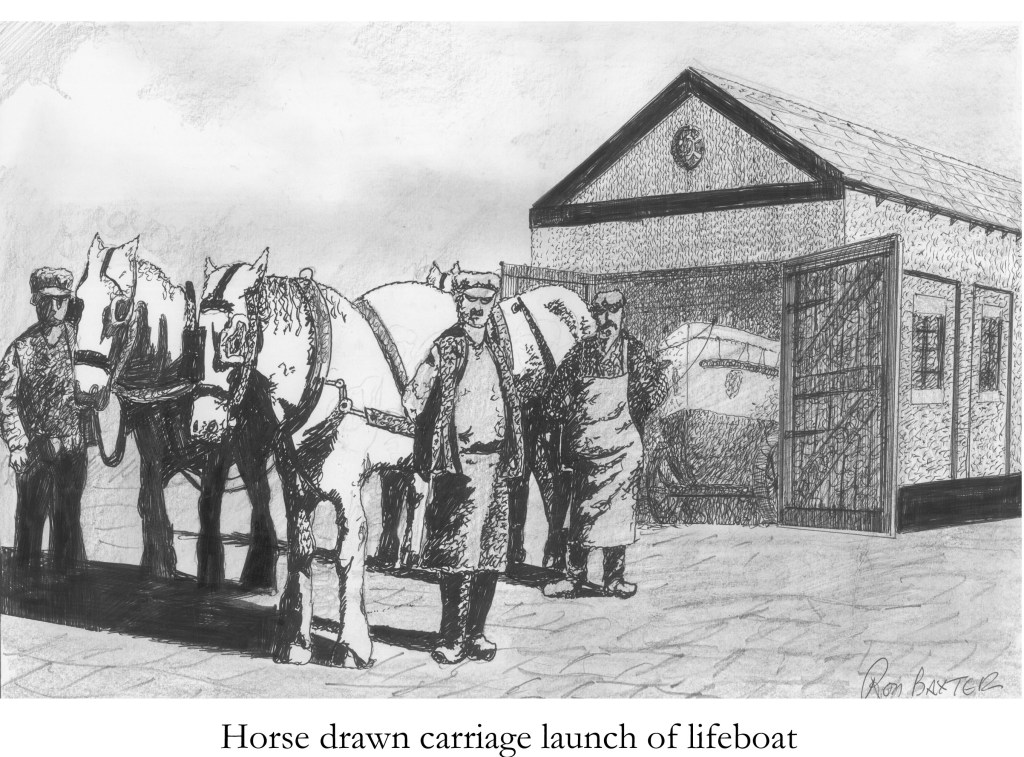
Record of Service Rendered by lifeboat Edward Wasey (1862-1879)
October 29th, 1863. Schooner Northern Lights of Preston. Aground on Bernard Wharf. Rescued the crew of four. Towed out by tug Wyre.
October 30th, 1863. Ship Lillias of New Brunswick. Aground in Lune Channel. Lifeboat towed out by tug Wyre. Tug got close enough for 26 crew to jump aboard. Captain and 2 Mates stayed on board until it refloated. Lifeboat stood by 3 hours.
October 20th, 1865. Brigantine Highland Mary. Aground on Bernard Wharf. Saved crew of 5.
December 7th, 1866. Barque Inga of Kragero.
April 1st, 1871. Soldier rescued from Beacon.
September 18th, 1878. Barque Charles Challoner. Tug unable to hold barque and driven onto sandbank, just before midnight. Nineteen crew jumped onto tug before she swept away leaving one young boy on board. Lifeboat Edward Wasey was quickly launched and the crew succeeded in rescuing the boy.
August 29th, 1879. Schooner Elizabeth Ellen Fisher. Aground on Bernard Wharf sands. Stood-by vessel but filled with water. Lifeboat rescued crew of 4 men.
 Fleetwood Lifeboats Past